Narcotics Anonymous
Hillbilly ElegyNarcotics Anonymous is a recurring part of J.D. Vance’s effort to help Mom through addiction: a modest meeting-room setting where recovery is discussed, strangers describe their struggles, and a son tries to turn attendance into practical support for his mother. In the book, its importance lies less in any claim that it resolves her addiction than in the hope it briefly gives their relationship a shared purpose. J.D. Vance remains skeptical of the language surrounding addiction, but he attends, reads, and participates because he believes Mom is trying.
Role in Mom’s Treatment
When Mom returned from treatment, she brought home a new vocabulary, including the Serenity Prayer and the view that addiction was a disease. At thirteen, J.D. Vance resisted the idea that this framing could explain behavior that had damaged the family; he and Mom argued over whether it expressed scientific truth or offered an excuse. The memoir does not present his skepticism as the whole story. He also recognizes that the disease language may contain both truth and a way of avoiding responsibility, and he distinguishes his doubts about the slogans from his belief that Mom is making an effort.
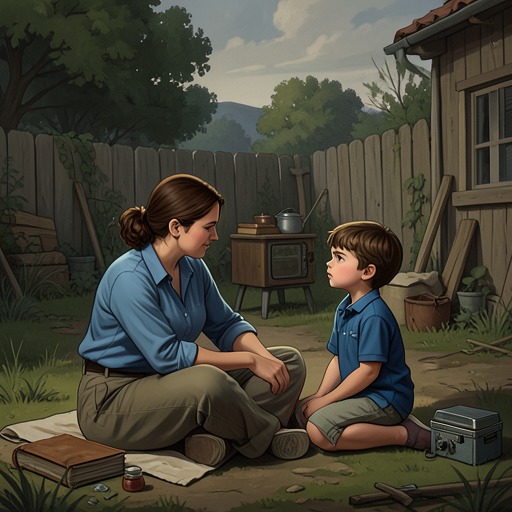
That distinction shapes his involvement. He reads what he can about addiction and makes a habit of going to some of Mom’s Narcotics Anonymous meetings. Treatment, as he observes it, seems to give her a sense of purpose; their participation in it also gives mother and son something to share. His attendance is therefore both an attempt to understand the problem and an act of loyalty. He does not report that the meetings cure Mom or settle their arguments. Instead, he keeps showing up because he thinks his presence might help her get better.
The Meeting Room and Its Participants
The meetings J.D. Vance attends take place in a plain conference room, with about a dozen chairs arranged in a circle. Participants introduce themselves by name and identify themselves as addicts. The orderly routine offers a stark contrast to the disorder addiction has brought into his family life, but it does not make recovery seem simple. The room gathers people with different circumstances into a shared setting without making their prospects identical.
One evening, a man arrives several minutes late. His unkempt appearance suggests that he has been living on the streets, and he describes estrangement from his children and spending whatever money he can gather on drugs. He has come to the meeting because it is warm, not because he is ready to promise abstinence. When the organizer asks whether he would try to stop using for more than one night, the man answers candidly that he probably will not and expects to return to drugs the next evening. His admission gives the meeting a sobering limit: being present is not the same as being prepared to change.
The man says he has lived in Hamilton for most of his life but was born in Owsley County, in eastern Kentucky. J.D. Vance only later understands how close that county is to the area where his grandparents grew up. The detail links the meeting’s immediate account of addiction to the family’s Appalachian origins, without suggesting that the man and Vance’s relatives share the same history. It also places a personal distance beside a geographical proximity that the young narrator had not yet learned to recognize.
Hope, Limits, and Family Obligation
The meeting does not leave J.D. Vance with an easy lesson about recovery. He never sees the man again, and nothing in the account establishes what became of him. What remains is the candor of a person who cannot promise more than one night, a scene that complicates any simple faith in the meeting as a turning point. The memoir preserves both the opportunity to seek help and the uncertain outcome.
J.D. Vance’s own continued participation is driven by a different but related uncertainty: he wants to believe that Mom may improve, even when her behavior gives him reasons to fear otherwise. He later recalls attending many Narcotics Anonymous meetings, reading books about addiction, and taking part in Mom’s treatment as fully as he could. These efforts belong to a larger pattern of trying to help her, not to evidence that he controls her recovery. His involvement gives him a role, but not the power to make her choices for her.
Community Support and Religious Context
The book places Narcotics Anonymous alongside, but distinguishes it from, the practical support that Don Bowman’s church provides. In a region affected by manufacturing decline, joblessness, addiction, and family breakdown, the church can offer recovering alcoholics a community and the sense that they are not facing addiction alone. Its members also provide concrete assistance: they may connect someone to a job, and they buy a used car for Don Bowman’s family when he faces financial trouble. The church’s support extends beyond recovery meetings to material help and social connections.
That institutional support contrasts with Mamaw’s personal faith. Although she distrusts organized religion and dislikes conspicuous displays of piety, she gives money to churches in Jackson, Kentucky, and understands God as present in the family’s hardships and good fortune. During a frightening wrong-way drive, she insists that Jesus is with her in the car. These beliefs illuminate the family’s wider religious world, but they are not presented as Narcotics Anonymous doctrine. The memoir instead shows distinct forms of support operating in the same difficult landscape: private faith, church-based assistance, and recovery meetings. Narcotics Anonymous matters within that landscape as one place where J.D. Vance can accompany Mom, encounter the varied realities of addiction, and sustain hope without being promised a resolution.